The first AI-enabled Airbus A320 simulator is designed to teach pilots much like a human instructor. Unlike older systems with fixed scenarios, it observes trainees in real time, adjusts complexity, and gives corrective prompts when needed. Struggling with navigation or ATC? The simulator notices and adapts, helping improve decision-making and technical skills. This approach supports flight schools by providing on-demand guidance and detailed performance feedback between instructor sessions.
It allows training to scale in areas with few certified instructors, offering consistent, interactive learning. While human instructors remain central, AI bridges gaps, ensuring trainees receive immediate support and practice tailored to their needs, making simulator time more effective and accessible.
How AI Is Being Integrated into Flight Simulation?
The core idea behind the AI-enabled Airbus A320 simulator isn't to replace instructors—it's to enhance their reach and optimize how cadets learn. The simulator utilizes a combination of machine learning models trained on thousands of flight hours, encompassing both real-world operations and simulated environments. These models are designed to recognize flying patterns, errors, recovery attempts, and crew resource management behavior.
For instance, if a trainee consistently descends too early during non-precision approaches, the AI flags this behavior and adjusts the training program to focus more on altitude awareness and approach profiles. It can even simulate increasingly challenging weather, system failures, or traffic congestion dynamically based on the learner's pace. The goal is to stretch the pilot's mental bandwidth while maintaining a safe training environment.
The AI can also perform real-time post-flight assessments. Traditional post-briefings usually depend on notes and memory from instructors. But now, every throttle movement, heading change, or radio call is automatically logged and compared against expected procedure flow. The AI will then highlight deviation trends, making the debrief session less about generic comments and more about actionable feedback.
Another standout feature is voice interaction. Pilots-in-training can ask the simulator questions or request clarification mid-scenario. Instead of interrupting the flow for external help, the system responds with quick, relevant explanations. If a trainee is unsure about a checklist item during an engine failure, the simulator will not only guide them through it but also explain the reasoning behind each step.
What makes this integration powerful isn’t just the technology—it’s the timing. As global demand for pilots continues to climb, training bottlenecks remain a critical issue. This AI-enhanced flight simulator could reduce turnaround time by supplementing training hours without compromising quality. It’s not a full replacement for experience, but it’s a sharp tool for building the foundations faster and with more precision.
Designed for Precision, Built for Realism
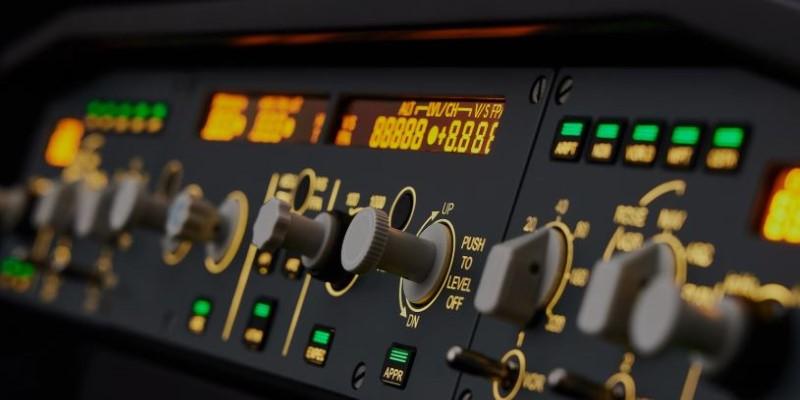
While the AI features receive most of the attention, the hardware side of this Airbus A320 simulator also deserves mention. The cockpit layout is full-scale and matches real aircraft controls in detail, from the FCU (Flight Control Unit) down to individual circuit breakers. High-fidelity visuals offer 220-degree panoramic views, allowing trainees to fly through custom-rendered airports with terrain accuracy and real-time lighting conditions that reflect actual day-night cycles.
The flight dynamics are also updated using real-world telemetry data, ensuring the aircraft responds to inputs as closely as possible to those of a real jet. When combined with the AI's behavioral tracking, the realism of the simulation forces the pilot to operate under nearly authentic stress levels. From understanding fuel management during a hold pattern to dealing with unreliable speed indicators, each scenario is designed to build real confidence through repeated, adaptive exposure.
Another upgrade is the motion system. While previous simulators relied on scripted movements based on control inputs, this new system interprets AI-generated stress responses and simulates turbulence or system faults with greater nuance. It's one thing to know an engine fire checklist from memory—it's another to execute it with warning alarms blaring and the cockpit physically shaking. That kind of training, muscle memory, matters in the real world.
This simulator is not just a leap in interface—it’s a complete evolution of experience. It doesn't merely show what flying looks like. It trains what flying feels like.
Why This Matters for Aviation Training?
The launch of the first AI-enabled Airbus A320 simulator matters because it blends human skill-building with machine precision. As air travel expands and airlines face pressure to bring new pilots up to standard more quickly, this tool enables schools to train smarter, not just longer. It narrows the training gap for cadets who may have the technical know-how but lack real-world fluency in cockpit workflows or judgment under stress.
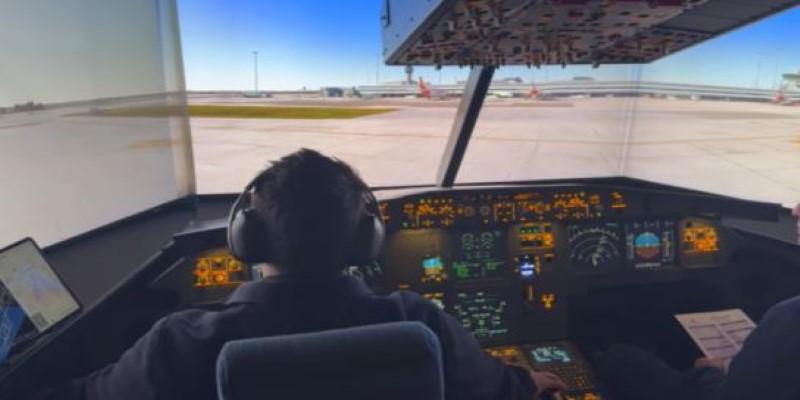
Flight instructors benefit too. Instead of juggling several students with limited attention per session, instructors can use AI performance data to customize their time, focusing on specific weaknesses identified during simulation. That means training becomes less about watching from a corner and more about coaching where it’s needed most.
From a safety standpoint, this is a win. The system can simulate edge-case scenarios with high accuracy—such as dual hydraulic failures or rare weather combinations—that may be difficult to replicate or too risky in a live aircraft. Trainees get to fail safely, learn quickly, and repeat until responses become second nature.
There's another layer to this as well. The AI doesn't just teach flying—it collects data. That data can help manufacturers, airlines, and regulators study how trainees react in emergencies, how procedural errors unfold, and how well checklists are understood across different demographics. Over time, this can enhance both the pilot curriculum and the aircraft design feedback loops.
Flying Into the Future with Smarter Tools
Aviation has always relied on both machines and human skill. The first AI-enabled Airbus A320 simulator doesn't replace that—it refines it. Instead of just automating tasks, it helps pilots build sharper instincts through adaptive training. This shift turns static simulation into personalized learning. For new cadets or experienced pilots, it’s less about logging hours and more about improving judgment. As demand for pilots grows, tools like this could make training faster, smarter, and more effective—if the industry is ready to keep up.